


 EN
CN
EN
CN



2026/08/19 2351view
Starting September 1, the Interim Measures for Wuhan City‑Wide Unified Urban‑Operations Governancecomes into legal force, formalising institutional rules for megacity digital governance.
Street‑lights represent the most pervasive municipal physical assets across any city. One urgent practical question emerges for operators: what technical conditions must legacy street‑light fleets satisfy to qualify for integration into the unified urban‑operations platform?
The regulation establishes three core institutional pillars for city‑operations management:
Unified incident intake: all urban operational events are centrally received, assigned, tracked until case closure.
Mandatory data‑sharing: municipal departments and public‑utility organisations hold statutory obligations to submit operational data to the central platform.
Inspection, supervision & performance assessment: urban‑service workflows are enclosed within closed‑loop supervision and formal KPI evaluation systems.
This regulatory step builds on global‑relevant trends of refined smart‑city governance. Shanghai ran early domestic pilots, Chengdu built its operational “Smart Rongcheng” three‑tier city‑management platform, and Wuhan now codifies this practice into formal local government regulation. Unified onboarding of municipal assets has become an explicit management requirement, shifting focus from platform construction toward real‑world operational performance.
Previously cross‑department data exchange depended on manual negotiation and willingness to co‑operate. Now public‑facility operational data must be aggregated “as much as applicable”. Legacy siloed municipal IT systems will face compliance reviews.
Key metrics including lamp‑on rate, energy‑saving ratio, and fault‑response turnaround time were once only tracked for internal‑industry reviews. After joining unified‑governance platforms, these figures become city‑level governance indicators: quantifiable, comparable, and auditable for accountability.
Unified‑governance platforms manage operational events generated by sensor‑perception data. If a lamp fails yet cannot automatically send fault alerts, the platform receives no incident trigger — such fixtures cannot be formally onboarded. Per‑lamp‑level sensing capability becomes a hard prerequisite.
Traditionally retrofit ROI was measured primarily by electricity‑bill reduction. Today project value must be evaluated across two dimensions: energy‑saving gains plus city‑scale IoT‑perception capacity. Identical capital expenditure delivers expanded benefits; retrofit proposals require updated comprehensive value assessment.
Within Chengdu’s Smart Rongcheng urban‑governance ecosystem, municipal street‑lighting achieved large‑scale platform integration, with IOTCOMM as core technical supplier for lighting IoT perception modules. This real‑world project validates stable performance for city‑scale IoT infrastructure under complex metropolitan road conditions.
Around 180 000 street‑lights and 210 000 control nodes across Chengdu’s main urban districts are connected, covering more than 3 000 streets. The deployment delivers 50 % composite energy‑saving, cutting annual electricity expenditure by nearly RMB 100 million.
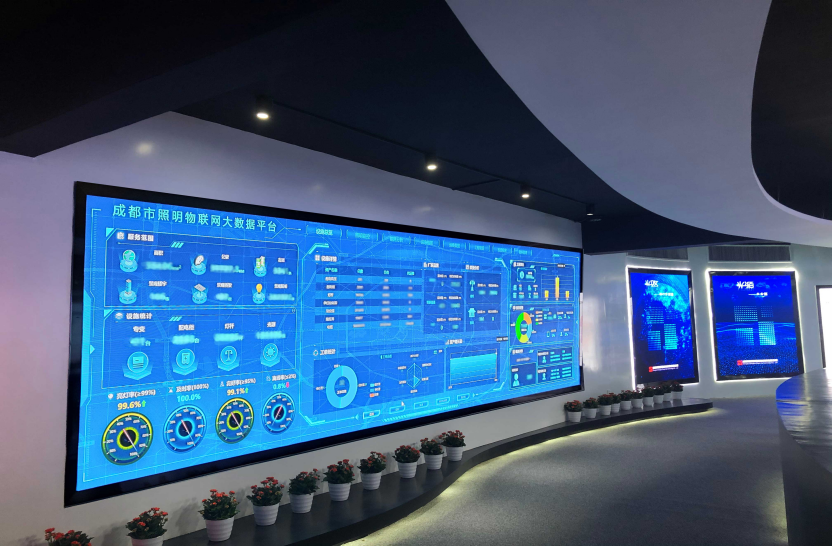
Leveraging GIS mapping, the platform visualises municipal lighting‑asset status in real‑time. System algorithms automatically detect fixture damage or circuit failure, delivering sub‑second alerts with precise geolocation. AI engines classify fault‑risk priority to optimise maintenance‑work‑order dispatching; the city’s average monthly lamp‑on‑rate reaches 99.38 %. Standardised APIs link directly to the citizen‑service hotline, unifying citizen complaints, automated fault‑alarms and maintenance workflows within one closed‑loop system. This is exactly how Wuhan’s “unified‑intake” requirement can be implemented for street‑lighting operations.
In Wuhan itself, 56 000 street‑lights have completed intelligent retrofitting with IOTCOMM controls, achieving >50 % energy‑saving and annual power savings of 18 million kWh. This proven technology runs in 600+ cities inside China and over 40 countries worldwide including Bangkok, Dhaka and Chile.
Wuhan delivers regulatory framework; Chengdu delivers validated operational practice. Large‑scale unified onboarding of municipal‑lighting assets is now technically and administratively feasible.
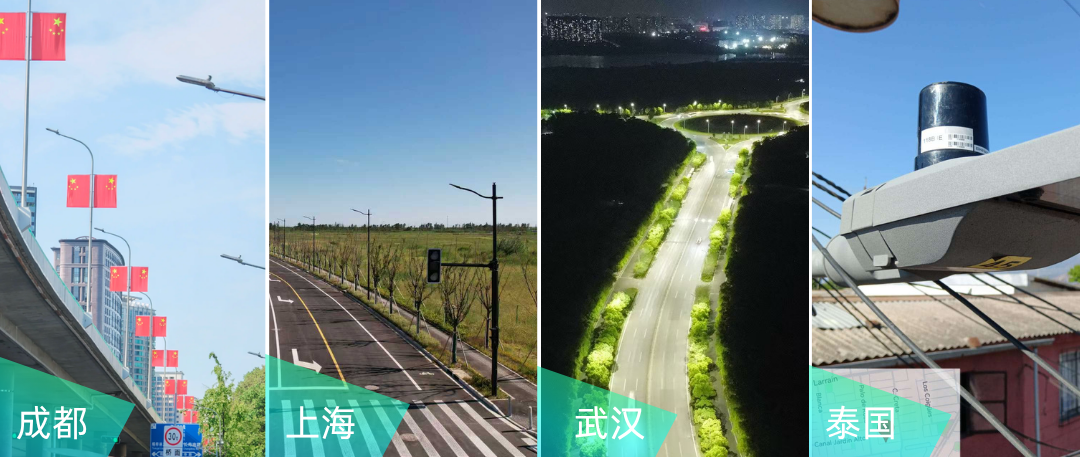
Every street‑light must collect real‑time electrical readings (current, voltage) plus operational health status, enabling automated fault alerts and reducing reliance on manual inspection or passive citizen reports. IOTCOMM’s single‑lamp‑controller product family has shipped cumulatively over 4 million units, deployed across 41 nations; hardware maturity and deployment‑cost no longer present major barriers for city‑wide roll‑outs.
Terminal sensor feeds converge to build a city‑wide operational dashboard with interfaces to municipal‑government service systems. The Hetu Urban‑Lighting Intelligent‑Monitoring Platform embeds native‑AI analytics, fusing multi‑dimensional datasets including traffic flow, pedestrian volume, weather and time‑of‑day to generate adaptive dimming strategies. Patented edge‑cloud co‑ordination guarantees responsiveness and reliability for massive connected‑node deployments. The platform supports per‑lamp monitoring, full closed‑loop work‑order management, citizen‑hotline integration, and compatibility with 8 communication protocols for interfacing with legacy municipal systems.
Street‑light poles feature built‑in power supply, mounting capacity and communication access — making them the most evenly‑distributed physical urban‑resource. Two high‑value use‑cases are emerging:
Low‑altitude‑economy applications: smart‑poles serve as drone docking stations for routine urban‑inspection missions, with active pilot programmes running in Wenjiang and other districts.
Energy‑storage‑enabled street‑lights: poles transform from pure power consumers to distributed energy nodes, storing power by day for night‑time illumination while supporting urban power‑grid load‑regulation.
Integrating lighting assets into unified urban‑governance can be realised via upgrade of existing infrastructure; mass full‑replacement of poles is not required.
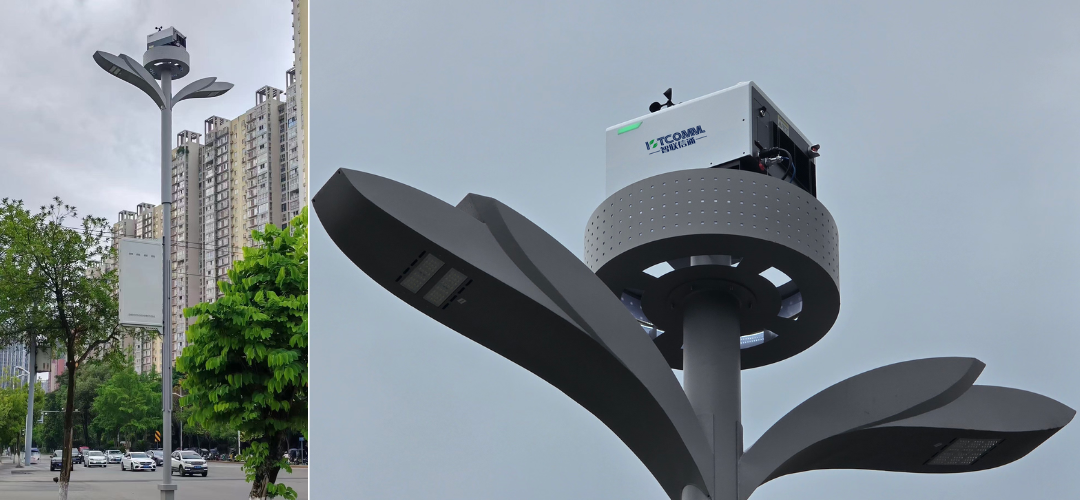
The legal institutionalisation of unified urban‑operations governance signals a shift for smart‑city development: priority moves from building digital platforms to maximising tangible operational outcomes.
The upper limit of city‑management effectiveness depends on digital maturity of end‑field infrastructure. Street‑lights stand out among municipal assets: they have the densest physical distribution, are comparatively ready for retrofitting, and still hold largely untapped data‑driven value. Wuhan’s September‑1 regulation marks only the beginning of this transformation.
IOTCOMM smart‑lighting solutions are live in 600+ Chinese cities and over 40 countries, managing more than four‑million street‑light endpoints globally.
If you would like to explore smart‑street‑light retrofit and unified urban‑governance integration for your city project, please reach out to our international‑sales team:
Tel: +86 592 252 0936
Email: oversea_sales@iotcomm.com
Web: https://www.iotcomm.com
 Consult
 Top
Top
 Pre-sales call:
 Xiamen switchboard:
 Email:oversea_sales@iotcomm.com